In Avatar The Last Airbender the Avatar is one who masters each bending discipline. They will be born to a certain Nation and will have the respective bending of that nation and then from there they will begin to develop the other bending disciplines and train under a master of each until they have achieved Mastery of each vending discipline. The Avatar is seen as the balance between the bending disciplines. I would like to extend the same measure of balance to another who has demonstrated capacity to become a master of a discipline of each Nation who is not an Avatar. That individual would be Sokka.
Sokka is native to the water tribe of the Avatar world. He is a natural born leader and strategist and through his journey with the Avatar we see how he has acquired new fighting styles from each of the Nations that he visits alone his journey. A metaphor is something that is being represented as something else. The Avatar is a metaphor for the balance among the bending disciplines. I argue that Sokka is a metaphor that represents the Avatar in terms of fighting styles amongst the nation. As each Nation will have their own fighting style that is influenced by the culture of that Nation, so does the bending of that Nation also reflect the culture of the respective Nation.

Water
The fighting style of the water tribe has imagery to that of wolves in how Warriors are dressed. They use weapons such as clubs, boomerangs, as well as bladed weapons and spears made from the bones and teeth of animals that they have killed. Sokka is seem to be very skilled with his boomerang as well as other hand-to-hand combat weapons of his native tribe. We have seen evidence that he is a skilled Warrior though it is also shown in the series that he is not always the best warrior. This is the fighting style that he is most natural to him. This is the example of the water fighting style.
Earth
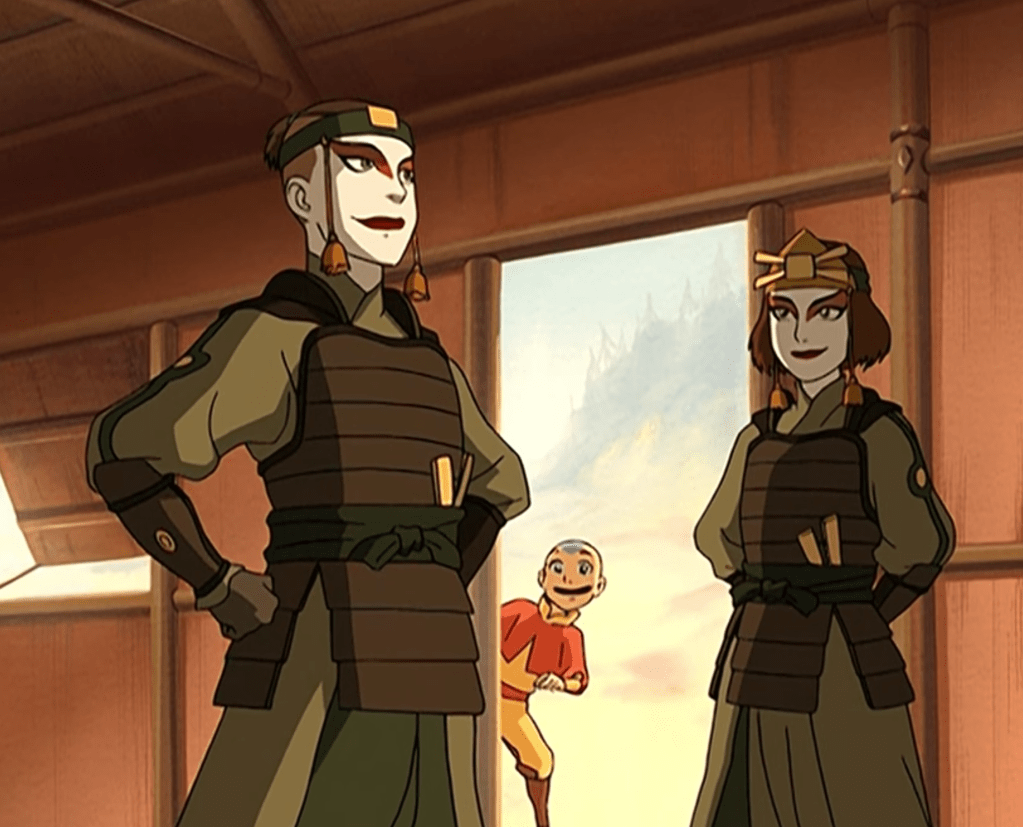
As the series progresses the team finds themselves in the Earth Kingdom and on the island of Kiyoshi Sokka is humbled when he gets bested by the Kiyoshi warriors. This fighting style uses a strong foundational stance along with grapples and throws to be able to get their opponent off-center so that they can easily be disarmed or thrown off balance. While the opponent is trying to re-establish themselves the Kiyoshi warrior will take advantage. He manages to appeal to them to train him in their fighting style. After spending some time training he shows proficiency in their fighting style and is recognized as an honorary Kiyoshi warrior. This stands as the example for him learning earth fighting style.
Fire
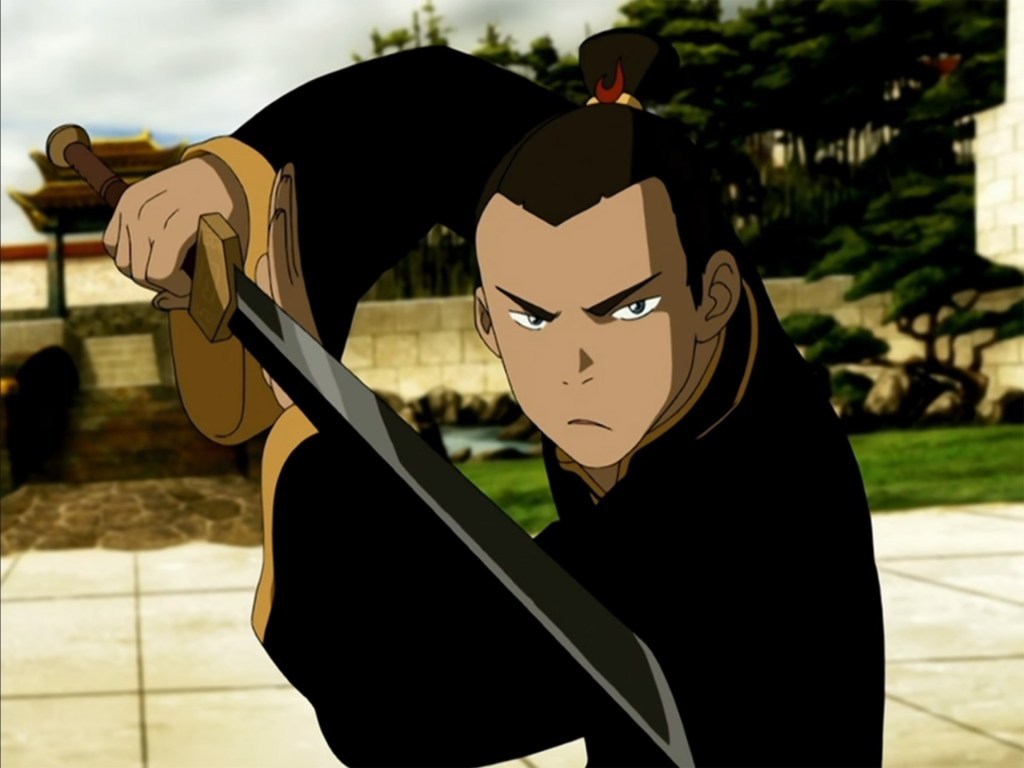
Moving forward in the Avatar team spins a time hiding in the Fire Nation. While doing so they come across a sword master and he takes Sokka as his pupil. Sokka learns the fighting style of Fire Nation swordsmanship. This style of combat teaches Sokka how to use his surroundings and show precision and dexterity in his movements. This fighting style is different than the heavy movements from his water tribe style and is not as rooted and grounded as the Earth kingdom style. This will serve as an example of Fire Nation Style.
Air
I have seen a number of people make different attributions for the air element. Since my focus is in fighting styles I will have to omit this area of combat from the fighting skills that Sokka acquires throughout the series. That being said, by watching how Aang maneuvers while in combat with others it can be seen that the air fighting style is that of evasion. The way in which Aang focuses on evading and dodging strikes from an opponent and will even redirect an attack leads me to believe that this style of combat would enhance Sokka’s evasion. It is worth noting that Sokka may have picked up some of these fighting skills simply by watching Aang.
With these examples it can be shown how Sokka learns the fighting disciplines of the other nations just as the Avatar learns the bending disciplines of the other nations. The Avatar demonstrating Mastery over all the bending disciplines serves as a means of making the Avatar valid and relevant to each of the Nations as well as their respective benders. Sokka can take on a similar role as the Avatar in terms of the fighting styles of each nation. Having studied each of them that were available to him he has made himself relevant to their culture and their fighting style. In this way Sokka becomes a metaphor that represents balance just as the Avatar does.


 Rhetoric Criticism of ATLA
Leave a comment